Affiliate blogs did not get a secret penalty after the March 2026 Google core update. Most of them got re-scored. Google finished rolling that update out on 8 April 2026 (US/Pacific), after starting on 27 March, and called it a regular update meant to surface more relevant, satisfying content from all kinds of sites. If your "best X" posts, thin AI roundups, and affiliate landing pages slid, the useful question is not "how do I file an appeal?" It is "which pages fail a people-first audit, and what do I do with each one?"
That is what a real core update recovery plan looks like for affiliate blogs: measure the drop correctly, audit page by page, add author and testing signals where they are missing, and stop treating every ranking loss as a temporary glitch.
12d 4h
Official rollout length of the March 2026 Google Search core update, from start to completion on the Search Status Dashboard.
Quick answer
Quick verdict: Confirm the March 2026 core update finished, wait at least a full week after completion, then compare Search Console traffic for the week before 27 March with a week after 8 April. Large drops need a page-by-page audit against Google's people-first self-assessment questions. Rewrite pages that can earn trust with real testing and clear authorship. Merge near-duplicates. Prune thin AI "best X" posts that exist only to rank. Do not wait for the next core update to magically restore templated content you would not send a friend.
In plain English:
- Prove it was the update. Align dates with the Search Status Dashboard, not vibes.
- Sort pages. Small drops (for example position 2 → 4) usually do not need drastic rewrites. Large drops (for example 4 → 29) do.
- Fix with proof. Add first-hand testing, named authors, sourcing, and clearer structure — not keyword packing.
- Cut what cannot be salvaged. Deleting is a last resort, but search-first affiliate fluff often should go.
We have not run a private ranking recovery experiment for this article. The plan below follows Google's own core-update guidance, the public March 2026 dashboard record, and the patterns affiliate blogs keep repeating after every broad update.
What the March 2026 core update actually was
Google released the March 2026 core update on 27 March 2026 and marked the rollout complete on 8 April 2026. That is 12 days and 4 hours on the Ranking product history. Google described it as a regular update designed to better surface relevant, satisfying content. There was no companion "we are targeting affiliate blogs" blog post, and there did not need to be. Core updates are broad reassessments of how systems judge helpfulness across the open web.
A few timing details matter for affiliate publishers:
- A separate March 2026 spam update finished on 25 March 2026. Ranking changes between 24 and 27 March can blur spam-policy work and the core update. Do not blame every dip on "the core update" without checking that window.
- Official Ranking history for 2026 lists later core and spam updates (including the May 2026 core update). There is no April 2026 core update on the Search Status Dashboard or Search Central incident feed as of this writing. Do not invent one.
- Google still says improvements can show up through smaller, unannounced updates — you do not always have to wait months for the next named core update — but there is no guarantee.
Our take: If your affiliate blog mostly ships templated "best [tool] for [year]" posts with stock screenshots, recycled pros/cons, and no named tester, March 2026 did not "unfairly" punish you. It did what core updates are for: prefer pages that help a searcher finish a job over pages that exist to harvest clicks.
Related reading if AI search is also eating your clicks: AI Overviews Are Eating Blog Clicks: What to Do Now. Core updates and AI Overviews are different problems. Mixing them into one panic post usually produces the wrong fix.
Why affiliate blogs got hit harder than they admit
Affiliate blogs are not doomed. Lazy affiliate formats are. The pages that keep falling after people-first updates tend to share the same fingerprints:
| Pattern | What the reader sees | Why it fails a people-first check |
|---|---|---|
| Templated "best X" listicles | Same intro, same table shape, swapped logos | Little original analysis; could be any site |
| Thin AI roundups | Fluent prose, zero testing, vague claims | Mass-produced feel; no first-hand expertise |
| Soft comparison pages | Feature lists copied from marketing sites | No decision value; reader still has to research elsewhere |
| Monetization-first layout | Ads and affiliate boxes before substance | Looks built for search engines, not people |
| Ghost authorship | "By Staff" with no bio or testing notes | Weak trust signals when money is involved |
Google's helpful, people-first content guidance keeps asking the same uncomfortable questions: does this page offer original analysis? Would you bookmark it? Does it show first-hand expertise? Is it mass-produced? Affiliate blogs that answer "no" out loud in private usually still publish the page anyway. That is the real recovery backlog.
Step 1 — Confirm the drop the way Google recommends
Do this before rewriting a single post.
- Open the Google Search Status Dashboard and note the March 2026 core update start and end dates (27 March → 8 April 2026, US/Pacific).
- Wait at least a full week after completion before drawing hard conclusions. Google says so for a reason: mid-rollout data is noisy.
- In Search Console, compare a week before 27 March with a week after 8 April.
- Separate Web Search from Images, Video, and News. An affiliate blog usually lives or dies on Web Search, but image-heavy review posts can confuse the picture.
- Split small drops from large drops. Google's own framing: a move from position 2 to 4 is not a five-alarm fire. A move from 4 to 29 is.
Also check whether impressions held while clicks fell. That can point to AI Overviews or SERP layout changes rather than a pure core-update demotion. For that triage, use the Day 2 framework linked above instead of rewriting every URL.
Tools that help here:
- Ahrefs or Semrush for visibility and ranking history around the update window — useful context beside Search Console, not a replacement. If you are choosing between them on a blogger budget, see Ahrefs vs Semrush for Bloggers.
- Microsoft Clarity for post-update behaviour: rage clicks, dead scrolls, and exits on review pages that look "fine" in rankings but fail readers.
Warning: Do not "recover" by buying links, spinning ten new AI posts overnight, or stripping every affiliate disclosure. Those are panic moves. Google explicitly advises against quick SEO folklore fixes and asks you to make sustainable changes that help users.
Step 2 — Run a page-by-page affiliate audit
Sitewide vibes are how you waste a month. Export the pages with the largest position or click losses, then score each page against a short checklist derived from Google's self-assessment themes.
Audit scorecard (use per URL)
Score each item yes / partial / no:
- Original proof: Did a real person test, price-check, or use the product? Screenshots, dates, and method notes count.
- Decision value: Can a reader choose after reading, or do they still need three other tabs?
- Authorship: Named author, bio, and why they are qualified for this niche.
- Freshness with honesty: Prices, plans, and requirements checked recently — with a "last verified" date.
- Independence: Clear affiliate disclosure; cons as concrete as pros; alternatives named.
- Uniqueness vs your own site: Is this one of five near-identical "best tools" posts fighting each other?
- Presentation: Readable structure, not a wall of AI paragraphs plus a comparison table slapped in the middle.
- Intent match: Does the page answer the query people actually land with (pricing, alternatives, "is it worth it")?
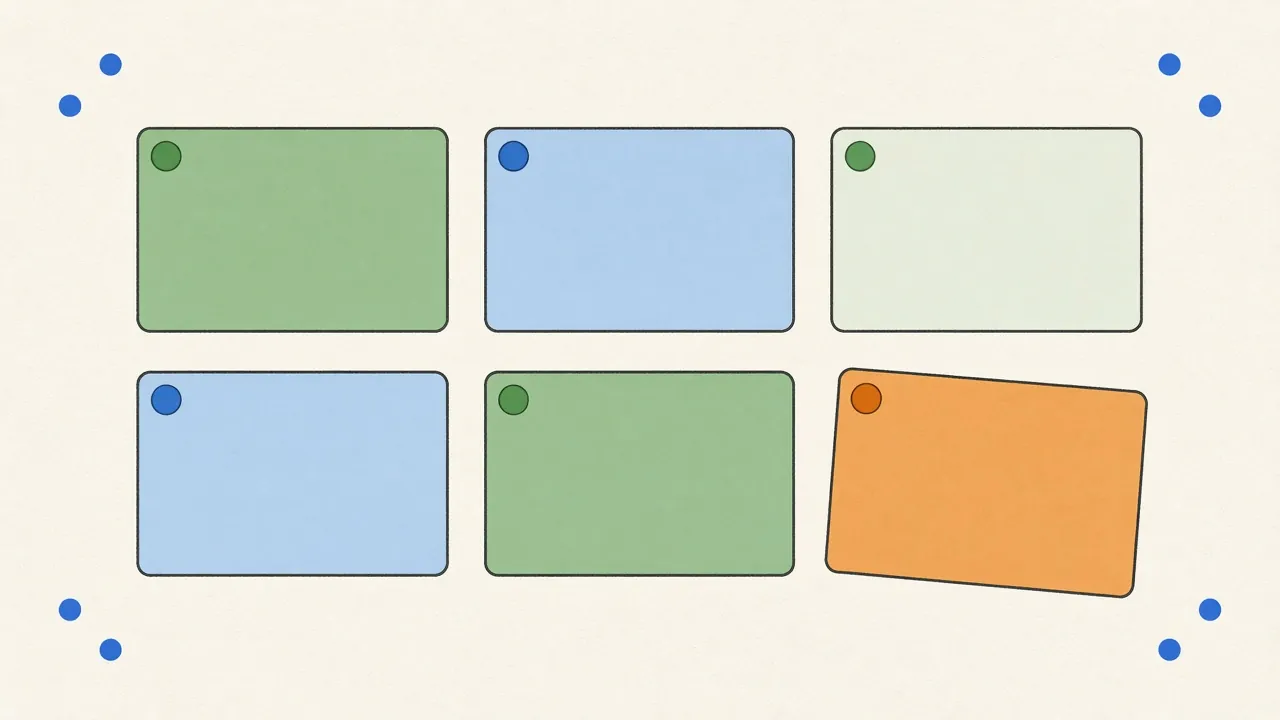
Suggested triage after a large core-update drop
Those percentages are a planning heuristic for a typical mid-size affiliate blog, not a Google statistic. The point is forced decisions. "We will improve everything a little" is how nothing recovers.
Triage rules that actually work
| Outcome | When to choose it | What to do |
|---|---|---|
| Rewrite with proof | Page has a real audience and commercial intent, but thin evidence | Add tests, pricing tables you verified, named author, clearer verdict |
| Merge | Two or three posts cover the same cluster with overlapping keywords | Keep the strongest URL, 301 the rest, combine unique proof |
| Prune / redirect | Pure search bait, outdated program lists, or unsalvageable AI sludge | Redirect to a better page or remove if nothing useful remains |
| Keep | Small drop, still helps readers, already has testing notes | Avoid drastic rewrites; monitor for another cycle |
Google says deleting content is a last resort — and also that deleting sections built for search engines first can help the good content perform better. For affiliate blogs, those two sentences are not a contradiction. They are a filter.
Crawl support for the audit: Screaming Frog to find orphans, thin pages, duplicate titles, and redirect chains before you merge. On-page SEO hygiene while you rewrite: Rank Math for schema, internal links, and index controls — useful plumbing, not a recovery spell.
Step 3 — Rebuild author and testing signals
This is where most affiliate recovery plans stay abstract. "Add E-E-A-T" is not a task. These are tasks:
Author signals
- Put a real byline on commercial pages. Link it to a bio that states niche experience, not a generic "content creator" blurb.
- Separate reviewer from writer when money claims appear. A second pair of eyes on pricing tables catches the mistakes that destroy trust.
- Show how you make money. Affiliate disclosure belongs near the top of review and comparison posts, not only in a footer graveyard.
Testing signals
- State what you tested, on which plan, and when. "We clicked through the free trial on 2 November 2026" beats "powerful and easy to use."
- Prefer primary sources for rates and requirements: the program's own affiliate page, the network help centre, the pricing URL. If you cannot confirm a commission today, drop the number. That rule also applies to the stats articles on this site — see how we handle dated figures in Blogging Statistics 2026.
- Add failure notes. "The mobile checkout broke twice during testing" is more useful than another recycled pro list.
- Keep a changelog on big money pages: what changed on the last verification pass.
Experience that is honest about gaps
If you have not used the product hands-on, say so. Readers and algorithms both punish fake expertise. A transparent "based on public pricing and documentation" section is stronger than invented screenshots.
Real-world tip: For SaaS affiliate roundups, verify every commission and cookie window from the official program page on the day you publish — then set a calendar reminder to re-check after the next core update. Stale rates are a trust leak and a legal risk.
Step 4 — Fix the formats that March 2026 exposed
Templated "best X" posts
These survive only if the template is a shell for original work. Required upgrades:
- A dated methodology (how many tools, what criteria, what you refused to rank).
- At least one table that answers a decision, not a feature dump.
- A "who should skip this list" section.
- Unique screenshots or workflow notes, not logo walls.
If you cannot add those, merge the post into a stronger guide or prune it.
Thin AI content
Google's public guidance on AI content is consistent: automation is fine when the result is helpful and people-first; mass-produced pages that exist mainly to rank are not. For affiliate blogs, the failure mode is obvious — fluent filler around affiliate links.
Recovery move: keep AI for outlines, research summaries, and editing help. Require a human editor to add tests, opinions, and cuts. If a page reads like it could swap niches by changing three nouns, it is not ready to rank again.
Monetization pages that ignore the reader
Ad and affiliate density is not a ranking "factor" you toggle. It is a user experience. If Clarity shows people bouncing before the verdict, your recovery is a layout and substance problem, not a missing H2. When traffic recovers enough to chase ad networks again, compare requirements carefully — our Ad Networks for Small Blogs table is built from each network's own thresholds for that reason.
Step 5 — A two-week recovery sprint (practical)
Use this if you have limited time and a long list of losers.
Days 1–2: Search Console export, date comparison, top 30 impacted URLs, separate small vs large drops.
Days 3–4: Scorecard pass. Tag each URL rewrite / merge / prune / keep. No third tag called "maybe later."
Days 5–8: Rewrite the highest-revenue large-drop URLs first. Add author bios, testing notes, verified pricing, and a sharper verdict. Fix internal links from survivors to the new canonicals.
Days 9–10: Execute merges and redirects in Screaming Frog + Rank Math (or your redirect plugin). Remove soft-404 thin posts from sitemaps.
Days 11–14: Recrawl key templates, request indexing only for meaningfully updated URLs, watch Clarity on the rewritten pages, and write a short internal post-mortem: what failed the people-first test, what you will not publish again.
Then wait. Some changes show in days; Google says sitewide trust shifts can take months, and sometimes the next broad core update is when a cleaned-up site moves more clearly. Smaller unannounced updates can help earlier. None of that is a promise.
Mistakes that keep affiliate blogs stuck
- Treating a core update like a manual action. There is no reconsideration request for "please undo March 2026."
- Rewriting winners. Small drops on strong pages often need patience, not a full teardown.
- Publishing more thin posts to "recover faster." That usually deepens the hole.
- Chasing one viral SEO rumour (remove author box, add author box, delete dates, add dates) instead of improving usefulness.
- Ignoring cannibalization. Ten overlapping "best VPN" variants train Google to trust none of them.
- Skipping monetization honesty. Hidden affiliate intent on YMYL-adjacent topics is a trust problem, not a CRO trick.
- Measuring only rankings. If clicks return but Clarity shows confused users, you recovered the wrong way.
Tools for the recovery desk
| Tool | Role in recovery | Do not use it for |
|---|---|---|
| Screaming Frog | Crawl thin/duplicate/orphan URLs before merges | Inventing content quality scores |
| Ahrefs | Visibility dips, content gap after competitors moved up | Replacing Search Console date comparisons |
| Semrush | Position tracking around the update window | Fake "penalty" diagnostics |
| Rank Math | Schema, redirects, internal links, index controls | Believing on-page green lights equal recovery |
| Microsoft Clarity | Proof that rewritten pages actually help humans | Ranking predictions |
Pick one crawler, one rank tracker if you already pay for it, Clarity (free), and Search Console. That stack is enough for most affiliate blogs.
Who this plan is for — and who should skip it
Best for: Affiliate publishers with Search Console access, a finite set of money pages, and willingness to kill weak content.
Not ideal for: Brand-new blogs with almost no pre-update baseline, or sites whose entire inventory is spun AI listicles with no first-hand work to salvage. In that second case, recovery means rebuilding the content model, not polishing titles.
Our recommendation: Spend eighty percent of recovery time on the twenty percent of URLs that drive affiliate revenue and still have a path to genuine expertise. Let the rest redirect or retire.
Final verdict
Core update recovery for affiliate blogs is not mystical. Align your dates with Google's March 2026 rollout (27 March–8 April 2026), separate small losses from large ones, and run a ruthless page-by-page audit against people-first questions. Templated "best X" posts and thin AI content need proof, authorship, and decision value — or they need to go. Use Screaming Frog, Ahrefs or Semrush, Rank Math, and Microsoft Clarity as support tools, not as substitutes for better pages.
The next step is simple: export your top lost URLs today, tag each one rewrite / merge / prune / keep, and rewrite the first revenue page with a real test note before you publish anything new.